Showing posts with label The passage of time. Show all posts

Thursday, July 16, 2009

Smooth Operator

Nah, this post doesn't have much relevance to Sade's 1985 single detailing the life of a cold-hearted, jet-set gigolo nor removing noise from data. So if a search engine brought you to this remote corner of the Web by error ...

"No place for beginners or sensitive hearts When sentiment is left to chance. No place to be ending but somewhere to start."

Europe between 1938 and 1945 was no place for beginners or sensitive hearts, so Winston Churchill tasked "The Ministry of Ungentlemanly Warfare," or the Special Operations Executive (SOE), to pry it back from the Third Reich. The average life expectancy of SOE agents serving in occupied territory was six weeks despite their extensive training.

Etienne and Violette Szabó during their honeymoon

Some SOE agents were particularly ungentlemanly--they were women. Section F of the SOE employed 39 female agents in occupied France. Thirteen never returned. Of those, Violette Szabó, who volunteered as an agent after her husband Etienne was killed at El Alamein, is most likely the best known. Szabó, the second woman to receive the George Cross, was beaten, raped, starved, and eventually executed and cremated at the Ravensbrück concentration camp with three other female SOE agents shortly before it was liberated by Allied forces.

If you're like me, avoiding the noise about important issues of the day such as a universal health care "right" that "the rich" are going to pay for, there's relief and lessons to learn from history. Then, rather than working and paying taxes, one can take solace in some Violette Szabó-inspired movies, books and even a video game, Violet Assassin.

I don't think Gervase Cowell, an ex-MI6 officer and British Special Forces Club historian, had Violet Assassin or morphine in mind when he told Queen Elizabeth II, "I help the old to remember and the young to understand."

Tuesday, November 11, 2008

Standing in the Gap

This is the f'irst Veteran's Day I've spent without my father. He served in the U.S. Army from 1951 to 1953.

An electrician with Flour Corporation and one-month veteran of marriage to Mom, Dad figured he would wind up in Korea. The Army put him in the Signal Corps and sent him to West Germany. He was one out of hundreds of thousands of Cold Warriors who, from 1945 to 1994, waited near the Fulda Gap and the North German Plain, the most-logical routes of a Soviet invasion that never took place. Then there were the thousands of Army and Air Force personnel who served in encircled West Berlin.

My friend, Chris, served in the 11th Armored Cavalry Regiment, in Vietnam and in Germany. The Blackhorse was based in Germany three times: 1944-1948, 1956-1966, and 1972-1994. During the last period, its headquarters was at Downs Barracks in Fulda, where this Blackhorse memorial remains.

On this Veteran's Day, we shouldn't forget those who quietly stand in the gap: Marines at U.S. embassies, Coast Guard boarding teams, flight crews of Air Force refueling tankers, the men and women buried deep inside Cheyenne Mountain, the crews of Aegis guided missle destroyers and subs, the members of reserve units, those along an remote, fortified border with North Korea, and countless others past, present and future.

Monday, October 27, 2008

Miz Minka's Musings: Musical Monday: A Yodel

I've always been fascinated by yodelers and accordion players. What can I say? Mom and Dad said I made the crib rattle during The Lawrence Welk Show.

By way of Miz Minka's blog, here's a lady, Lisa Ward-Dillier, who does both at the same time. I can't remember an episode when Myron Floren yodeled. And he was inducted into the International Polka Hall of Fame!

Miz Minka's Musings: Musical Monday: A Yodel#links#links#links#links

"Wunnerful, Wunnerful!"

Thursday, October 9, 2008

One of the lost ...

I am a collector of facts. Most of them have no obvious value beyond making it a little more fun to watch Jeopardy! Otherwise they're only squatters in a diminishing number of my brain cells.

I was searching for John Wayne portraits for the last post when I came across a photo of Gail Russell, who was "discovered" by a Paramount Studios talent scout while still attending high school. She was a talented artist, who spent hours alone sketching and painting. When her parents entertained company, the painfully shy girl would hide under the piano. However, during the last of the 1930s and into the first months of World War II, Miss Russell's family had sold the piano and most other furniture to make ends meet. The girl was sleeping on spread-out newspapers at the time Paramount signed her for $50 per week. She graduated from school into Hollywood lights. The photo at left is of her and two other child actors signed by Paramount.

Miss Russell was beautiful to the point Paramount executives overlooked her extreme stage fright and total lack of acting experience. They set out to groom her into a star. Miss Russell was assigned an acting coach. She appeared on screens for the first time in Henry Aldrich Gets Glamour (1943).

More than 700 Paramount movies were sold to MCA/Universal in 1958 for television distribution. They were weekend and late-night television staples during my childhood. The Paramount movie I remember the best was Our Hearts Were Young and Gay, a 1944 film starring Miss Russell and Diana Lynn. She also co-starred in two Republic Pictures movies with John Wayne, The Angel and the Badman (1947) and Wake of the Red Witch (1948). These films capture Gail Russell at the pinnacle of her acting career.

Miss Russell had severe performance anxiety fueled by fears that she just wasn't good enough at her profession. She would become physically sick from fright and could not keep her hands from shaking during filming. So during production of The Uninvited (1944), the first movie in which she was featured, she tried alcohol as a means to relax. It helped her control the trembling, so she continued the practice.

Paramount terminated her contract after a 1950 DUI arrest. It was the first of multiple arrests. Miss Russell fell out of the public eye for a few years as she battled alcoholism. She sought treatment and attended AA meetings. John Wayne's second wife listed her as a contributing factor in a 1953 divorce action, something that both Miss Russell and Wayne denied. This contributed to her deepening emotional turmoil. Her 1949 marriage to actor Guy Madison ended in 1954.

Wayne selected her as the female lead for his 1956 Batjac Productions picture, Seven Men from Now. He did this despite being told Miss Russell looked 20 years too old to portray her 26-year-old character. Wayne's gamble worked. The movie, also starring Randolph Scott and Lee Marvin, is still viewed as a Western classic.

She had minor roles in two films, The Tattered Dress and No Place to Land, in the wake of Seven Men. But on July 4, 1957, she was arrested once again following a 4 a.m. accident. The intoxicated actress was charged with a felony after she drove a new convertible through a restaurant wall. A janitor was pinned underneath her car. After failing to appear in court the following summer, she was found passed out in her home by police officers. She was admitted to General Hospital's prison ward.

She said, "Everything happened so fast. I was a sad character. I was sad because of myself. I didn't have any self-confidence. I didn't believe I had any talent. I didn't know how to have fun. I was afraid. I don't exactly know of what--of life, I guess."

Miss Russell did not appear in another movie until 1961, The Silent Call. A few months later, she died alone surrounded by empty liquor bottles and her sketches. The cause of death was ruled as an alcohol-induced heart attack. Miss Russell was 36.

Saturday, October 4, 2008

A glimpse back at spring

This photo from late March shows the west bank of the creek cutting through this basin. The blooming trees are Eastern Redbuds. This 17-acre patch is south of the farm house and barns. It is part of the original quarter section, or 160 acres, my family claimed in 1857. My great grandfather sold it in tough economic times. My parents bought it back when I was in high school.

The grass is a blend of timothy and orchard grass. We used to run horses on it during the winter. Now it is baled once a year for hay. We use a clearing near the south end for some overnight camping and church and family wiener roasts. My son's Boy Scout troop camped there this summer. The hawks, owls, turkeys, blue herons and whitetail deer don't seem to mind sharing the space with us.

I dropped my digital camera and it's not back in service. I need to get out and take fall pictures.

Thursday, October 2, 2008

Goodbye, Mr. Peters.

Another figure from my childhood has passed. House Peters, Jr., 92, died yesterday in Los Angeles.

Peters was a long-time supporting actor, appearing in so many of the shows I watched such as Perry Mason, The Roy Rogers Show, Lassie, The Twilight Zone, The Lone Ranger and Gunsmoke. Do you remember the Shark Men of the Flash Gordon serials? They lived in an underwater kingdom on Mongo. House was the chief shark.

He is best known for being the first Mr. Clean in Proctor and Gamble television ads. I still remember being very careful not to disturb my mother's nap during As the World Turns every afternoon. Mr. Clean made a racket cleaning house during commercials. Mom slept right thought it. However, if I happened to bump the sofa or drop something, she would wake and tell me to be quiet. Then Mr. Clean would wink at me.

Peters was sharp. He set goals, saying he would change careers if not a star by age 50. By that time, 1966, he was doing little acting beyond a recurring role on Lassie. Peters then began a sucessful real estate business.

I extend best wishes to his wife, Lucy Pickett, their two sons and a daughter, and four grandchildren. One can learn more about Peters and his family in his autobiography, Another Side of Hollywood.

Wednesday, October 1, 2008

He did not die in bed

Former Ford County, Kan., Sheriff Bat Masterson called his one-time undersheriff "the greatest of us all." And President Teodore Roosevelt said the old lawman would charge hell with a bucket of water. They were describing Bill Tilghman, one of Oklahoma's legendary "Three Guardsmen".

Tilghman, born in 1854, arrived in Kansas with his family two years later. By age 16, he was hunting bison in southwest Kansas. There he befriended Bat and Jim Masterson, the Earp brothers, and other hunters who later became peace officers in Dodge City, the "Queen of the Cowtowns". He served as an Army scout, operated a saloon, and was a rancher after the bison herds vanished.

Bat Masterson appointed Tilghman as a Ford County, Kan., deputy sheriff in 1877, where he served until 1884 when he became Dodge City's marshal. He also served as a lawman during the "County Seat Wars" in western Kansas.

In the 1889 Sooner land rush, Tilghman moved his family to Guthrie, Oklahoma Territory. He served as a lawman in both Guthrie and Perry. U.S. Marshal Ed Nix offered him an appointment as a federal officer. Tilghman and fellow U.S. deputy marshals Chris Madson and Heck Thomas were assigned the task of hunting down the Dalton-Doolin gang. The citizens of Coffeyville, Kan., ended the career of the Daltons. The Three Guardsmen killed or led posses that captured the remainder. Together they made more than 300 arrests.

The marshal settled in Chandler and was elected Lincoln County sheriff in 1900. Later, he served Lincoln County in the Oklahoma Legislature. He resigned to become Oklahoma City's first appointed police chief in July 1911. He immediately directed officers to shut down brothels, gambling and bootlegging operations.

At the end of the two-year term, Tilghman returned to Chandler and operated Champion Stock Farm. The operation centered around Tilghman's horse, Chant, a Kentucky Derby winner.

He also directed a movie, The Passing of the Oklahoma Outlaws, which was released in 1915 by Tilghman's Eagle Film Company. Disturbed by the unfavorable portrayals of lawmen and the casting of outlaws as heros in other movies, he enlisted Nix, Madsen, other lawmen and the last surviving member of the Dalton-Doolin gang to portray themselves. Tilghman also starred in the movie. Theater owners were reluctant to run it because it lacked stars. The legend traveled the country, showing the movie and speaking to crowds.


Tilghman never retired from law enforcement. Along with Madsen and a few others, he held a statewide, special deputy's commission that was renewed by each of Oklahoma's early governors. He was called to stem tribal "Crazy Snake" uprisings and thwart Klu Klux Klan activities. In the early 1920s, oil was discovered in Oklahoma. Lawless boom towns sprang up in the oil patch and the state suffered from an unrelenting crime wave. Governor M.E. Trapp requested Tilghman to serve as his special investigator.

A few fearful citizens of Cromwell, nearly 60 miles east of Oklahoma City in Seminole County, petitioned Trapp for help. After the discovery of oil in October 1923, Cromwell grew from nothing into a wide-open, lawless city of more than 5,000 people by the following spring. The city had recorded at least 10 unsolved murders. Its oil-soaked, wood-frame businesses were primarily illegal saloons, gambling halls, and brothels. A man named Killian was reputably Cromwell's representative for crime bosses in Oklahoma City. Illegal drug use and "White Lightning" consumption was rampant. A Federal Prohibition agent, Wiley Lynn, was suspected of being paid to look the other way. Trapp asked Tilghman to tame one more town, "the wickedest in all Oklahoma."

The lawman's second wife and children asked him to turn down the assignment. Tilghman, who had not told them or Trapp he was dying from cancer, went regardless. Tilghman told a friend he wanted to die with his boots on and "not in bed like an old woman." After six months as the marshal of "Wicked Cromwell", he had made considerable progress with no help from Seminole County authorities. Lynn also arranged to release some of Tilghman's arrestees behind the scenes.

Halloween night, 1924, the marshal was having coffee in Ma Murphy's cafe, still in operation despite Tilghman shutting down Ma's attached "dance hall", with his deputy Hugh Sawyer and businessman W.E. Sirmans. Sirmans was one of the citizens who had requested help from Gov. Trapp. At 10 p.m. the men heard a shot fired outside in the street. Tilghman, who had stopped wearing his heavy gunbelt and Colt Peacemaker because of his cancer pain, drew a Colt .32 automatic from his pocket and ran outside.

G. Wayne Tilman, a distant cousin of Marshal Tilghman, described what happened next in "The Long Trail that ended in Cromwell: the Life and Death of legendary lawman Bill Tilghman", a July 1999 Cowboy Sports article:

"A drunken Wiley Lynn stood there, gun in hand. Brothel madam Rose Lutke was standing next to him. Another known prostitute, Eva Caton was sitting in Lynn's car with her date, a furloughed army sergeant.

Tilghman clasped Lynn's gun hand while jamming his own automatic into Lynn's ribs. He yelled for Hugh Sawyer to disarm Lynn. Rose Lutke, Lynn and Tilghman stood body to body in the dark as the young deputy rushed towards them. Two shots rang out. Lutke started screaming. After a few seconds, Tilghman slumped against the wall. Lynn disarmed Sawyer, who had yelled "Wiley Lynn has shot the Marshal!" though he had been unable to actually see the incident.

Lynn and Lutke jumped in the car and sped off.

William Matthew Tilghman died twenty minutes later on a sofa in the used furniture store next to Ma Murphy's. He had been hit twice in the left lung and bled to death internally."

One month after his death, every "every flophouse, bar, pool hall and brothel" in Cromwell were torched. The homes were spared. The arsons were never investigated. It was rumored the buildings were leveled in retribution for Tilghman's death by his friends.

Tilghman's body laid in state at the Oklahoma State Capitol. Lynn lost his federal position but was acquitted by a jury under suspicious circumstances. Key witnesses such as Rose Lutke vanished. Sirmans fled to Florida after his life was threatened.

Lynn died in July 1932. He entered Madill's Corner Drug Store and pointed a handgun at Crockett Long, an Oklahoma State Bureau of Investigation agent. Lynn blamed Long for his failure to obtain a job with the state bureau. Long, who had served as Madill's chief of police, had also arrested Lynn in the past. Long turned, tried to get Lynn to put down his weapon, and then drew his .44 Smith and Wesson revolver. Both men shot each other. A bystander, 22-year-old Rody Watkins, was fatally struck in the spine by a bullet from Lynn's .38 Colt semi-auto pistol that had passed through Long's body.

Long died on the operating table a short time later. When Lynn heard Long had died, he said, "If he's dead, now I'm ready to die." Lynn folded his arms across his chest, and the killer of three men stopped breathing.

Upon hearing of Lynn's death and expressing regret for the deaths of Long and Watkins, Tilghman's widow, Zoe, said, "No jury on Earth can acquit him now."

Tilghman's grave can be found in Chandler's Oak Park Cemetery. His home, a private residence, is on the National Historic Register. Chandler celebrates Independence Day, his birthday, in Tilghman Park, which sits on land Tilghman once owned.

Cromwell is now a small town with less than 300 people. In years past, it has celebrated "Bill Tilghman Day" on the second Saturday in October.

Friday, September 26, 2008

Canyons and Caprock


One night I explored an unknown place. I sensed the different hues of red in the towering walls, the scant trickle of water through eroded channels, the cries of hawks, ages-old campsites out of the elements, greyed and twisted wood, dust-laden sagebrush and dried grasses, and ankle-wearing rocks.

Most dreams vanish once morning light hits. This dream stuck. It was a real place. I just lacked physical evidence.

Nearly two years later I visited relatives in Guymon, Okla. One morning I decided to take a day trip south into the Texas Panhandle to visit Amarillo and the Panhandle-Plains Museum in Canyon. After buying some pre-Clinton-Biden-Brady-ban AR-15 magazines at a gun show in Amarillo's Civic Center and consuming a tolerable, but not Kansas-quality, steak, I visited "Texas' Largest History Museum" on the West Texas A&M University campus. With more than 3 million artifacts, some also call it the state's Smithsonian Institution.

After two hours, I had seen only a speck of the place. Part of the museum was off-limits because of remodeling work. Some of the main exhibits featured Palo Duro Canyon, 12 miles east of Canyon.

Amarillo and Canyon sit atop what Francisco Coronado named the Llano Estacado, a mesa larger than all of New England, in 1541. Like much of of the plains, even yet referred to as the Great American Desert, the Llano Estacado looks flatter than unleavened bread. At least until one looks closer. Widening and deepening cracks proved the first theory wrong as I drove east. Eventually the cracks grew so wide the highway could not skirt them. The road relented to the variformed, segmented depths of Palo Duro Canyon.

Just that initial drop from caprock reminded me of Georgia O'Keeffe's description of the canyon captured in a display of her work at the museum. "It is a burning, seething cauldron, filled with dramatic light and color."

As I spent the rest of the light experiencing an iota of the 120-mile-long rift, I knew the place from my dream is somewhere along the Texas Panhandle's Caprock Escarpment. If it can't be found in Palo Duro Canyon, once home to the Comanche and Charles Goodnight's JA Ranch, there are the Tule and Caprock Canyons.


I suspect I'll go back if only in a dream.

Thursday, September 11, 2008

Old Soldiers Never Die: The Ruins of Fort Union

Some things we sense lack an obvious scientific explanation. Many cottage industries and what skeptics term as junk or psuedo-sciences are hinged on déjà vu, the feeling of having lived past lives, dreams, apparitions and second sight. So much unexplained phenomena involves old military posts and battlefields. There is Fort Sheridan's "Woman in Orange", the still-heard rallying cries of the Irish Brigade at Antietam, and the ghost of Lt. Benjamin H. Hodgson of Co. B, 7th Cavalry, of Little Bighorn.

Fort Union, New Mexico, is one of those places ghost hunters visit. The adobe, brick and limestone ruins rise up like Stonehenge from the windswept blue grama. Miles of ruts, carved by countless freight wagons between the 1820s and 1870s, still lead to and from the fort.

Disney World it's not. Lt. Colonel Edwin V. Sumner, the post's first commander, picked the site of Fort Union in part because it was far from Santa Fe, "that sink of vice and extravagance." Even though it's not far from Interstate 25, Fort Union is still isolated. There's no doubt why the 10th Infantry sang "There's a Land that is Fairer than This" in 1891 when marching out at last.

It was a stunningly quiet fall afternoon when I visited. I heard little beyond the geese honking and the Stars and Stripes flapping overhead at first. As the gnomon's shadow marched across the relic sundial on the parade ground, it seemed nonsensical to think of time as flowing onward from now toward the future. Albert Einstein wrote, People like us, who believe in physics, know that the distinction between past, present, and future is only a stubbornly persistent illusion."

If you've heard regimental band music or have seen a troop of cavalry ride into dust at a place like Fort Union, I'm not going to question your sanity. I'm not certain why I sensed what I did on those flagstone paths laid down so long ago. The energy will remain long after the adobe bricks have all turned back to dust.

Thursday, September 4, 2008

Laughter in the Rain

So many songs have been written about the rain. Today's continued soaking reminded me of one from 1974, Neil Sedaka's Laughter in the Rain.

That song features the alto sax work of Jim Horn, perhaps the most recorded sax player in history. So much of his work seasoned the songs of my childhood such as the Fifth Dimension's Up, Up and Away and The Age of Aquarius and Good Vibrations by the Beach Boys. I'd drag my blue Panasonic ball-and-chain radio to bed. I'd stay awake past midnight, when AM radio waves traveled the best, listening to WLS in Chicago via a plastic earplug.

Now that I think back, Jim Horn is probably the primary reason I picked the alto sax out of a vast fifth-grade band line-up. Music is a universal language. Jim Horn's exquisite playing spans the whole range of inflections that cause us to bond emotions and memories with what would otherwise be noise. If the task can't be done with anything from a soprano to bari sax, Mr Horn can switch to an oboe or flute and haunt me just as much. Check out his oboe playing in the The Carpenters classic, For All We Know.

My parents approved my choice because they liked Boots Randolph's Yackety Sax. Mom and Dad bought a "vintage" Vito that probably dated from the late 1940s. It is gold to me still despite its lack of lacquer, countless dings, and green specks. It rests next to a Selmer Mark VI tenor, my parents' Christmas gift to me two years later.

Sedaka and Horn are still amongst the ranks of the hardest-working and not-notorious people in show business. They've been recording, writing, and blessing our culture since the 1950s. I doubt they've seen the dusty roads of the Osage Cuestas. I do, nonetheless, thank them for the magic their music adds as dust turns to mud on this laughably wet day.

Wednesday, September 3, 2008

The Scrapper

I went Green before it was trendy. I've been scrapping out failed hard drives, power supplies, some old motors and worn-out appliances out of habit. It was something my father always did. It was a practice he expected us boys to master as his parents demanded of him. At the time, I didn't like doing it. But the habit stuck.

What others tossed in the landfill, Dad could convert it into something of value. When something broke or he saw a need he could meet through creativity, Dad pulled solutions out of junk piles. He'd spend some time scribbling with pencil and consulting catalogs. Next, he would assemble other components, often from other piles of miscellany he or his junkyard-operator friends maintained. When advance work was finished, he'd enter the shop and convert the junk into an asset.

He was the sort of Dad who, when asked if I could have a new bike, would point toward a pile of scrap and say, "You'll find the parts for one over there." Then he would help me clean up threads, patch inner tubes and straighten spokes.

So Mom never complained too much about the junk piles. He did move or diminish them every decade or two. He had special piles for scrap copper, brass, and aluminum as I do now. There are other piles for scrap iron and steel, which aren't hauled off as often.

He absolutely hated hearing Hank Williams, Jr. sing "A Country Boy Can Survive." I'd torment him by bellowing out the lyrics. But Dad was a survivor. Born in 1930 he wouldn't have ate if his family failed to convert scrap into treasure. He grew up in a junkyard. Junk built a solid future for the family following WWII as the country embraced peace and prosperity. The family shifted from trading scrap and bought farm land.

As I have been scrapping, I've reflected more on my legacy from Dad, a retired master electrician and jack of many other trades, who died June 29. I once assumed we didn't share as much in common as he did with my brothers. But as I walk the same paths to the horse barn and the shop and wrap my hands around his tools, he still guides me. The copper I strip out of old motors reminds me of our connection and the blessings that still flow from it.

The "interactive" paper money isn't green anymore, but I am thanks to you, Dad.

Friday, August 29, 2008

Two Americas, a nation divided against itself cannot stand.

Brigid shared her thoughts about pie cutting and Ayn Rand. Many agree with her. Some disagree. And a few describe her as "arrogant" and "ignorant".

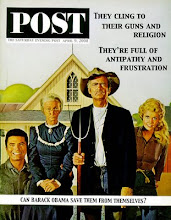
Such is life in the "Two Americas" of the workers and the greedy few. The Progressive movement is nothing new. Why anyone would associate its most recent orator, Sen. Obama, with hope and change escapes me. Sen. Obama hasn’t offered anything new. It is the same vagueness about government taking a little from the exploiters to close the gap between them and the exploited advanced for more than a century. It hasn't worked yet, and not for lack of trying.

The ignorant, arrogant journalists at the New York Times published an article Aug. 16, “Seeing Tougher Race, Allies ask Obama to make ‘Hope' specific.”

““I particularly hope he strengthens his economic message — even Senator Obama can speak more clearly and specifically about the kitchen-table, bread-and-butter issues like high energy costs,” said Gov. Ted Strickland of Ohio. “It’s fine to tell people about hope and change, but you have to have plenty of concrete, pragmatic ideas that bring hope and change to life.”

Sen. Obama will tax the excessive, windfall profits of “Big Oil” and use some of the tribute money to give exploited Americans a $1,000 rebate. But he doesn’t address how he can force foreign-based corporations such as Dutch Royal Shell and the huge oil companies in Saudia Arabia, Russia, Venezuela, Brazil, Mexico, Iran, and China that dwarf U.S.-based energy corporations to pay taxes. If he can collect them, how will he keep “Big Oil” from raising prices or exporting the oil to friendlier harbors?

Sen. Obama might turn out to be another Barbary pirate and be placed on trial at The Hague. At the very least, he will scramble when the Saudis and Chinese stop funding the national debt, cease propping up our inflated currency, and end trade with us.

Americans have also invested in “Big Oil” and perhaps don’t even know it. Are you paying into a pension fund, saving to send your children to college, pay life insurance premiums, have certificates of deposit with a bank, or have a 401K plan? If you do, you are a stakeholder in “Big Oil.”

Who do we expect to bail out financial institutions when they fail? Could it be the promise of a $1,000 rebate could keep us from retirement or our children from obtaining the American Dream?

Al Gore compared Sen. Obama to the first Republican president, Abraham Lincoln, during the Democratic National Convention. Yet President Lincoln warned us that a nation divided against itself cannot stand. Progressives speak of fairness, a redistribution of wealth from greedy corporations and fat cats to those defined as exploited--Two Americas.

This is one nation. We imperil the republic to treat it otherwise.

Republicans sleep through economics and history courses, too, and that is why that party lost control of Congress in 2006.

Tuesday, August 26, 2008

The most quiet room in the house.

We're blessed with several privvy visits of lore. Elvis leaving the world from a Graceland water closet, Old Mother Hubbard fetching beer from the outhouse for her dog, and Thomas Crapper improving upon the work of Italian plumbers in service to the Queen. Then there are outhouse legends such as the lantern-waving lady ghost of Plimoth Plantation. We also have the history of Andy Gump, originator of those blue, plastic, rental outhouses parked at county fairs, construction zones, and the National Mall during protests and rallies.

Private toilets are quiet and are usually equipped with locks. Some thoughtful people keep a stock of magazines and books in theirs. Others run phone and Cat5e cables into their johns, which is something I'll never do. The throne room should remain an elemental place. Advances in wireless technology have made that pointless at any rate. However, the bathroom is a place where one can think tangentially. Unless someone starts pounding on the door . . .

Well, anyhow, I went into the lavatory at midday to clean up before a rare trip to town. While trimming my beard, the guage popped off the clippers. I drew the clippers back too late, which reminded me how terrified my two-year-old daughter was the last time I butched up my beard and had to shave it off. She cried and wouldn't come near me for weeks. That was 12 years ago, and since I was going to town to pick up very-same daughter for a doctor's appointment, I attempted to blend in the damage with a little more clipper work.

It worked somewhat like expecting body putty and chicken wire to renew a rusted-out '67 Mustang. The plastic guage again popped off. It went into the trash where it was soon met by a lot of gray whiskers.

After disposable razor work, the mirror face was the same one that petrified my daughter. The faint scars from accidents and fights each brought back a memory. The personnel-manual habits came back as I leveled out the sideburns and trimmed the moustache. Not many wrinkles were hiding under there, which was surprising. The face shows age, but it is all above eye level.

The toddler-turned-teenager didn't notice I had shaved for at least 15 minutes. Then she rolled her eyes. No tears in sight. Just sheer orneriness.

"The kids these days!"